DocFusion

The UK insurer’s batch blind spot – Why FCA compliance fails without visibility
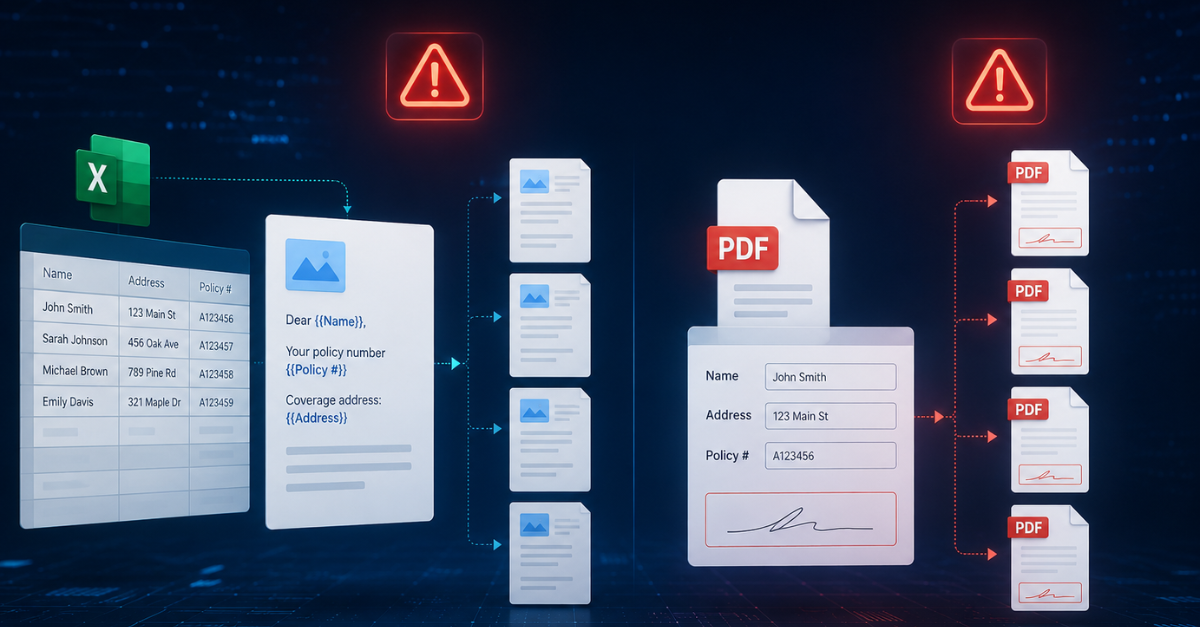
For UK insurers, Financial Conduct Authority (FCA) compliance is only as strong as the document batch processes that underpin it. Every policy update, claims letter, and customer communication carries both risk and responsibility. A single document that is delayed, duplicated, or lost puts compliance on the line.
The FCA demands consistency, accuracy, and timely communication. Without real-time monitoring, retry logic, and audit trails, insurers are left in the dark. Compliance shifts from being a matter of evidence to a matter of assumption, and that’s a risk no insurer can afford.
The UK insurer’s batch operations need real-time monitoring for FCA compliance
A UK insurer that relies on overnight runs or manual checks in its batch workflows is working with blindfolds on. By the time errors are discovered, customers may already have received incorrect information, or deadlines may have been breached. Real-time monitoring changes this dynamic, giving insurers immediate oversight of every batch event. With dashboards that track documents as they move, FCA compliance becomes proactive instead of reactive. Problems are spotted early, addressed quickly, and documented for future audits.


How retry logic helps the UK insurer’s batch workflows stay FCA compliant
Mistakes in batch processing are inevitable, but how they are corrected defines compliance. A UK insurer without retry logic is forced to rerun entire jobs, wasting time and resources while exposing the business to FCA compliance failures. Smart retry logic isolates errors and automatically reprocesses only the failed items. This ensures continuity and accuracy across every batch run. The result is a smoother operation where compliance is supported by technology rather than undermined by bottlenecks.
Audit trails provide the UK insurer’s batch proof for FCA compliance
For regulators, proof matters more than promises. A UK insurer must be able to show exactly how each batch was handled from start to finish. Audit trails provide this evidence with time-stamped records of approvals, reruns, and resolutions. Instead of telling regulators that compliance was achieved, insurers can show the journey behind every communication. These transparent trails transform each batch into a defensible process, giving FCA compliance the clarity it demands.
The FCA compliance blind spot holding UK insurers back in batch automation
The biggest blind spot for many insurers is assuming that legacy systems are good enough. Too often, batch jobs run in black boxes where errors only surface long after they have caused damage. This lack of visibility results in missed deadlines, unhappy customers, and compliance gaps. To move forward, every UK insurer needs modern batch oversight with real-time monitoring, retry logic, and auditable records. Only then can FCA compliance shift from risk to certainty.
Turning FCA compliance into a UK insurer advantage through smarter batch control
When batch workflows are modernised, FCA compliance evolves from a regulatory burden into a business advantage. Real-time monitoring ensures oversight, retry logic keeps processes moving, and audit trails deliver undeniable proof. For a UK insurer, these tools do more than satisfy regulators; they build customer trust and strengthen operational resilience. By closing the blind spot in batch operations, compliance becomes not just achievable but repeatable at scale.
Conclusion
The UK insurer’s batch blind spot is less about volume and more about visibility. Without monitoring, retry, and audit controls, FCA compliance will always be fragile. With them, every batch becomes fast, accurate, and regulator-ready.
DocFusion equips UK insurers with the visibility needed to close their blind spots and achieve FCA compliance with confidence.
Book a demo to see DocFusion safeguard your SLAs.