DocFusion

How medical insurers can implement document automation without replacing core systems
For many medical insurers, the idea of adopting document automation can seem tied to complex system upgrades or large-scale technology replacement projects. Yet the reality is very different. Medical insurers often assume that implementing document automation requires replacing legacy policy administration or claims systems, but modern platforms are designed to work alongside existing infrastructure. For medical insurers, document automation can be introduced without disrupting current operations. Instead of replacing systems, medical insurers can use document automation to enhance the way documents are generated, managed, and delivered.
This approach allows medical insurers to modernise document processes while maintaining the core systems they rely on every day.
Why medical insurers often delay document automation
Many medical insurers delay document automation because they believe new technology will require a full transformation of their IT environment. Policy administration systems, claims platforms, and CRM tools often sit at the centre of insurer operations, and replacing them is expensive and risky. As a result, medical insurers continue to rely on manual processes to create policy schedules, welcome packs, benefit summaries, and claims communications.
Without document automation, these processes can become time-consuming and prone to error. Teams may spend hours compiling documents, updating templates, and ensuring the correct member data is included. For medical insurers, these inefficiencies increase operational costs and slow down communication with members.
Where document automation fits into existing insurance systems
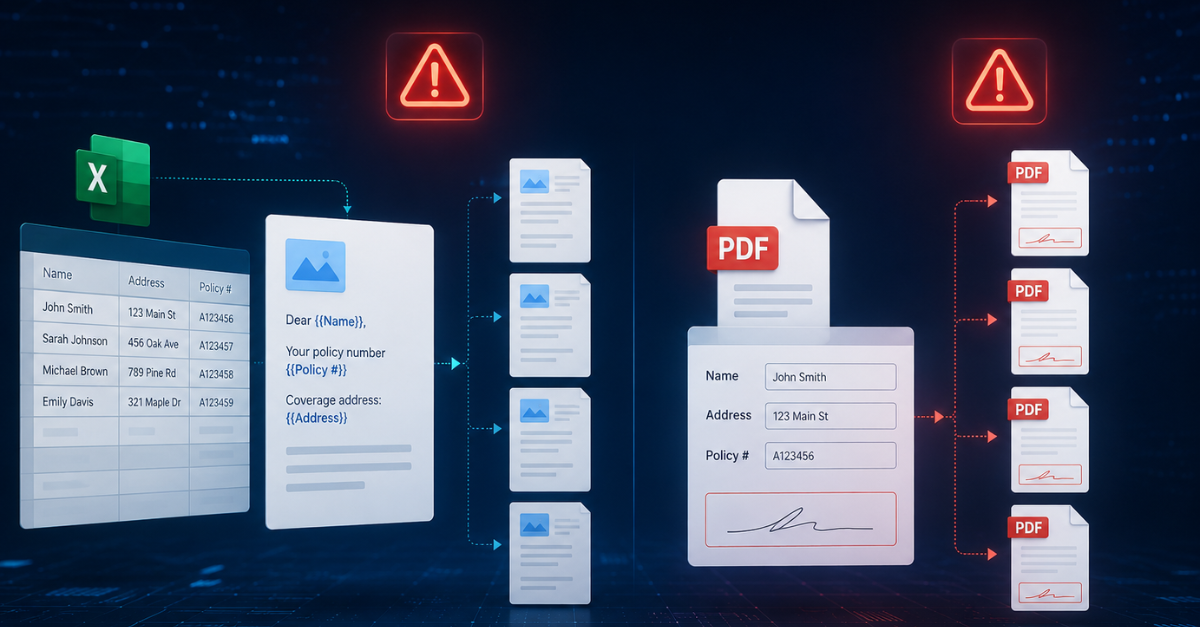
One of the most important advantages of document automation is that it does not need to replace existing systems. Instead, medical insurers can implement document automation as a layer that connects to policy administration systems, CRM platforms, and claims systems.
This integration approach allows medical insurers to continue using their existing infrastructure while improving how documents are generated. Data from core systems can automatically populate document templates, ensuring that member information, policy details, and benefit structures are always accurate. With document automation, medical insurers can generate documents instantly without requiring manual preparation or duplication of data.

The first documents medical insurers should automate
When introducing document automation, many medical insurers begin by focusing on the documents that create the most operational pressure. These often include policy schedules, welcome packs, benefit statements, renewal notices, and claims correspondence.
These documents are produced frequently and must contain accurate member data and compliant policy wording. For medical insurers, managing these documents manually can quickly become unsustainable as membership grows. Implementing document automation allows insurers to generate these documents automatically using structured templates and real-time system data.
By prioritising high-volume communications, medical insurers can quickly see the operational benefits of document automation while reducing administrative workload.
The operational benefits of document automation for medical insurers
The introduction of document automation can significantly improve operational efficiency for medical insurers. Automated document generation reduces the time employees spend preparing, reviewing, and correcting documents. This allows staff to focus on higher value tasks such as member support and operational improvement.
For medical insurers, document automation also improves consistency and compliance. Centralised templates ensure that every document contains the correct branding, regulatory wording, and policy information. Updates can be applied once and automatically reflected across all generated documents.
In addition, document automation enables medical insurers to generate personalised documents at scale. Member communications can include specific policy information, benefit details, and personalised messaging without manual editing.
Why document automation does not require replacing core systems
A common misconception among medical insurers is that modern technology solutions require replacing legacy platforms. In reality, document automation platforms are designed to integrate with existing systems through APIs or secure data connections.
This means medical insurers can keep their policy administration systems, claims platforms, and databases while introducing document automation to manage document generation. Instead of rewriting business processes, insurers simply connect their systems to the automation platform.
For medical insurers, this approach reduces implementation risk and accelerates time-to-value. Document automation can be deployed gradually, allowing organisations to automate key documents first before expanding automation across additional workflows.
Why DocFusion is the best option for medical insurers
For medical insurers looking to introduce document automation without replacing core systems, DocFusion provides a powerful and flexible solution. The platform is designed to integrate with existing insurance systems while enabling insurers to generate complex documents automatically.
DocFusion allows medical insurers to manage document templates centrally while pulling real-time data from policy administration, CRM, and claims systems. Through document automation, insurers can generate policy schedules, welcome packs, and member communications instantly and consistently.
By implementing DocFusion, medical insurers can modernise their document processes, reduce administrative workload, and maintain full control over document governance and compliance. Instead of replacing existing infrastructure, document automation with DocFusion enhances the systems insurers already rely on, enabling organisations to scale efficiently while delivering accurate and consistent member communications.