DocFusion

The risks of building your own document generation in your software platform
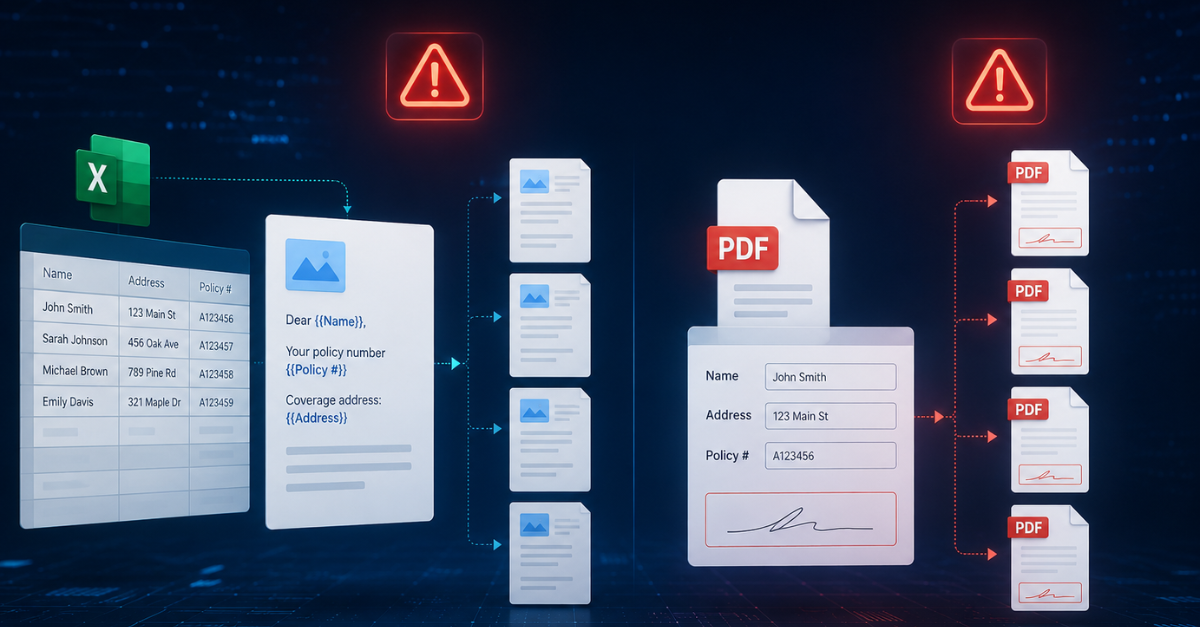
Every platform team eventually needs document generation, and almost every team makes the same mistake: building document generation in-house. At first, it feels simple enough to justify doing yourself. One customer needs a few invoices, another needs policy documents, and before long your team has written a renderer, connected the data, and shipped the first version. It works well enough in the beginning, which is exactly why so many teams underestimate how quickly document generation becomes more complicated.
The complexity arrives gradually. First come conditional sections and repeating data tables. Then customers need multi-language output, PDF encryption, watermarks, and large batch runs capable of generating tens of thousands of documents within strict processing windows. Before long, the “simple template engine” has become a product within the product, consuming engineering time that should be focused on the features customers actually care about.
The real issue is not that document generation fails immediately. The issue is that it quietly evolves into a permanent engineering and operational burden.
A better approach is to treat document generation as infrastructure, embed a purpose-built engine, and keep your engineering team focused on building the platform itself.
Document generation looks simpler than it is
From the outside, document generation appears straightforward. You merge data into a template, render a PDF, and deliver it to the user. For a simple invoice or standard letter, that approach works perfectly well, which is why the complexity is often underestimated early on.
The challenges appear when enterprise requirements arrive. Suddenly, templates need:
- Conditional content that changes by product, customer type, or jurisdiction
- Repeating sections and dynamic tables that expand unpredictably
- Template governance with approvals, versioning, and audit trails
- Multi-format output across PDF, Word, and HTML
- Large-scale batch processing for renewals, statements, and compliance communications
Individually, these requirements are manageable. Together, they create a specialised infrastructure challenge that competes directly with your core product roadmap. And unlike your platform itself, document generation is rarely the reason customers buy your software.
The hidden risks of building document generation yourself
One of the biggest misconceptions is that the cost sits in the initial build. In reality, the long-term cost comes from ownership.
A custom-built document engine becomes a permanent item on the engineering roadmap, with every new customer requirement landing on the backlog. That includes:
- New date formats
- Regulatory disclosures
- Additional language support
- Accessibility requirements
- Rendering inconsistencies
- Security controls
- Batch performance optimisation
Over time, developers spend more effort maintaining document infrastructure than building differentiated product features, and the risks begin to expand in ways most teams do not anticipate.
Compliance and audit risk
Enterprise document workflows require traceability and governance. When templates change, organisations need a clear audit history showing:
- Who made the change
- What changed
- When it happened
- Which version generated a specific document
Without proper controls, compliance gaps emerge quickly, especially in regulated industries such as insurance, financial services, and legal technology.


Scalability risk
Most in-house systems are designed for transactional generation rather than enterprise-scale batch processing. Problems usually appear during:
- Month-end statement runs
- Renewal cycles generating hundreds of thousands of documents
- High-volume communications
- Asynchronous processing under heavy load
Scaling document generation after the architecture is already established is considerably harder than designing for scale from the start.
Security risk
Document generation often handles highly sensitive information, including:
- Financial records
- Legal agreements
- Personal data
- Policy documentation
Despite this, document infrastructure rarely receives the same level of security attention as the core platform itself. That creates unnecessary exposure around:
- Document storage
- Encryption
- Access control
- PDF security
- Temporary file handling
Engineering focus risk
One of the biggest long-term risks is distraction. Skilled engineers end up maintaining rendering logic, debugging formatting edge cases, and managing template infrastructure instead of focusing on innovation within the product.
Over time, document generation becomes operational overhead that competes directly with the roadmap.
Why platform teams embed document generation instead
The alternative is to treat document generation as infrastructure rather than proprietary functionality.
Embedding a document generation engine is less like adding a plugin and more like integrating a database engine: critical infrastructure that operates invisibly inside the platform while supporting enterprise-scale output behind the scenes.
API-first integration
In an embedded model, the platform sends structured data and a template reference through a RESTful API while the engine handles:
- Document rendering
- Formatting
- Output generation
- Scaling
- Queue management
Documents can be returned synchronously for real-time workflows or asynchronously for large-scale batch processing, all without users ever leaving the platform.
Familiar template design tools
Templates are typically built in Microsoft Word rather than proprietary editors. This allows:
- Implementation teams to manage templates directly
- Business users to make controlled updates
- Developers to spend less time maintaining templates
The result is faster operational turnaround and less dependency on engineering teams.
Multi-tenant architecture
Embedded engines support isolated template sets, branding, permissions, and configuration for each customer or business unit, creating:
- Stronger governance
- Improved traceability
- Cleaner separation between customers
- Simplified enterprise management
Enterprise-grade capabilities from day one
Purpose-built document generation engines already include:
- Role-based access control
- Template versioning
- Audit history
- Watermarking
- Encryption
- High-volume batch generation
Capabilities that would take years to build internally become immediately available through integration.
The pattern platform builders are adopting
This approach is already widely used across document-heavy and regulated industries.
Insurance platforms use embedded document generation engines to produce:
- Policy documents
- Claims correspondence
- Renewal packs
- Regulatory disclosures
Financial services platforms generate:
- Statements
- Investment reports
- Client communications
- Compliance documents
Conveyancing and legal platforms rely on governed templates with strict version control and auditability requirements.
In each case, the pattern is the same. The platform owns the workflow, user experience, and customer relationship, while the embedded engine manages the complexity of document generation behind the scenes.
The build-vs-embed decision
If your platform requires document generation, there are generally three options.
1. Build it yourself
This provides full control but also creates responsibility for:
- Ongoing maintenance
- Governance
- Scalability
- Security
- Operational support
It may work for smaller use cases, but the complexity grows quickly at enterprise scale.
2. Use a platform-locked solution
Some document generation solutions only work within specific ecosystems. While this can work initially, it often creates architectural limitations as the platform evolves.
3. Embed a purpose-built engine
An API-first, platform-agnostic engine provides enterprise-grade capabilities without turning document generation into an internal product team.
Your developers stay focused on platform differentiation while the embedded engine handles document complexity behind the scenes.
For many platform teams, the decision becomes obvious once the document backlog starts competing with the product backlog for engineering attention.
Key takeaways
- Building document generation internally often starts small but grows into a long-term engineering and operational burden
- The biggest risks are scalability, governance, compliance, security, and engineering distraction
- Enterprise requirements rapidly increase complexity through conditional logic, multi-language support, template governance, and batch processing
- Embedded document generation treats documents as infrastructure delivered through APIs rather than functionality maintained internally
- Effective embedded solutions combine API-first integration, Word-based template management, multi-tenant architecture, and enterprise-grade governance from day one
- Platform builders across insurance, legal tech, and financial services increasingly embed document generation engines to avoid maintaining document infrastructure themselves
Embed enterprise-grade document generation
DocFusion is an embedded document generation and template management engine designed for software platforms that need enterprise-grade document output without the maintenance burden of building it internally.
With RESTful APIs, OAuth authentication, synchronous and asynchronous generation, multi-tenant architecture, and enterprise-grade governance built for integration, DocFusion allows platform teams to add sophisticated document generation capabilities without diverting engineering resources away from the core product.
If your platform generates documents and your engineering team is spending increasing time maintaining that capability, it may be time to rethink whether document generation should be infrastructure rather than custom code.
Book a technical discovery call to walk through the architecture, integration model, and partnership approach.