DocFusion

What is document generation in South Africa?
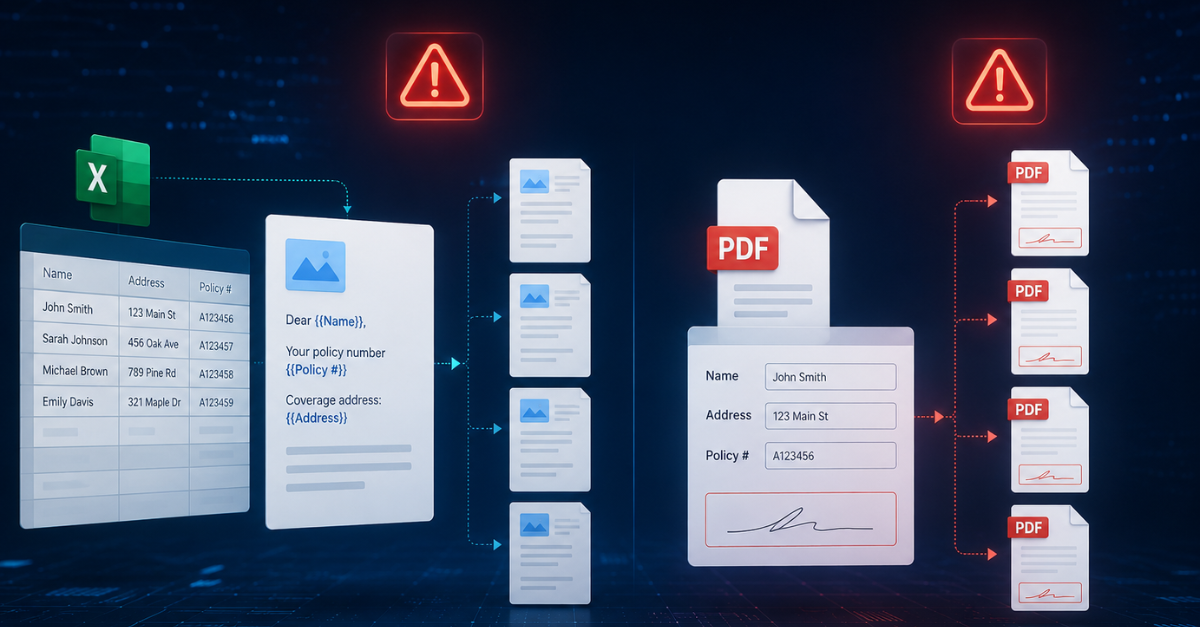
Document generation in South Africa refers to the automated creation of business documents using structured data, predefined templates, business rules, and integrated systems. South African organisations use document generation to produce contracts, invoices, insurance policies, bank statements, onboarding forms, compliance documentation, and customer communications at scale. As businesses across South Africa continue digitising operations, document generation has become essential for improving efficiency, reducing manual administration, and ensuring regulatory compliance.
In the South African market, document generation is particularly important because businesses often operate within highly regulated industries that require strict governance, accurate recordkeeping, and customer-specific documentation. Whether it is a bank issuing loan agreement, an insurer generating policy schedules, or a retailer producing finance contracts, document generation helps organisations streamline operations while maintaining consistency and compliance.
Why document generation matters in South Africa
South African businesses face unique operational and regulatory challenges. Organisations must often manage large customer volumes, multilingual communications, evolving compliance requirements, and hybrid digital-paper processes. Manual document preparation slows operations down and increases the risk of errors, especially when businesses are processing thousands of customer-facing documents every month.
Document generation addresses these challenges by automating the creation of accurate, standardised documents directly from business systems. Instead of relying on staff to manually edit templates or prepare PDFs, organisations can automatically generate compliant documents using live customer and transactional data.
For many South African enterprises, document generation also supports broader digital transformation initiatives. Businesses are under pressure to modernise customer experiences while reducing operational costs. Automated document workflows allow organisations to respond faster, scale more efficiently, and improve service delivery across multiple channels.
How document generation works
A document generation platform connects directly to business applications such as CRMs, ERPs, banking systems, insurance platforms, or custom databases. The platform retrieves structured data and inserts it into dynamic templates designed to support business rules and conditional logic.
For example, a South African insurer may need to generate policy documentation that changes based on product type, customer risk profile, payment structure, regulatory wording, and language preference. A document generation engine handles these variations automatically without requiring manual intervention.
Modern document generation platforms also support workflow automation, approvals, audit trails, version management, digital signatures, and omnichannel delivery. Documents can be generated in formats such as PDF, Microsoft Word, HTML, or email-ready output depending on operational requirements.
Industries in South Africa that rely on document generation
Banking and financial services
South African banks and lenders process enormous volumes of customer documentation daily. Loan agreements, onboarding packs, FICA documentation, account statements, and credit agreements all rely on document generation to ensure speed, accuracy, and compliance.
As financial institutions continue expanding digital banking services, document generation plays a key role in improving customer onboarding and reducing manual processing delays.
Insurance
The insurance industry is heavily dependent on document generation because policies, claims, renewals, disclosures, and customer communications all require dynamic content and regulatory consistency.
South African insurers often manage highly complex documentation environments involving multiple product lines, brokers, underwriting rules, and compliance obligations. Automated document generation helps insurers maintain operational efficiency while delivering professional customer communications at scale.
Telecommunications
Telecommunications providers in South Africa use document generation for customer contracts, invoices, onboarding documentation, service agreements, and account communications. With large customer bases and high document volumes, automation is critical for operational scalability.
Legal and professional services
Law firms, accounting firms, and corporate service providers use document generation to automate contracts, engagement letters, legal agreements, compliance documents, and client correspondence.
Government and public sector
Government departments and public entities increasingly use document generation to improve service delivery, automate citizen communications, and reduce administrative bottlenecks.
The role of compliance in South African document generation
Compliance is one of the biggest drivers behind document generation adoption in South Africa. Organisations must comply with regulations such as:
- POPIA (Protection of Personal Information Act)
- FICA (Financial Intelligence Centre Act)
- National Credit Act (NCA)
- FAIS regulations
- Industry-specific governance standards
Manual document processes create significant compliance risk because outdated templates, missing disclosures, or inconsistent wording can expose businesses to legal and regulatory consequences.
Document generation platforms help mitigate these risks by centralising templates, enforcing approval workflows, maintaining audit histories, and ensuring that every generated document contains the correct legal and regulatory content.
Why basic template tools are no longer enough
Many South African organisations still rely on manual Microsoft Word templates, static PDFs, or legacy mail merge tools. While these solutions may work for smaller businesses, they often struggle under enterprise-level complexity.
Modern document generation platforms support:
- API-driven integrations
- Workflow automation
- Centralised template management
- Dynamic conditional content
- Cloud and hybrid deployments
- Security and access controls
- Omnichannel communications
- High-volume batch processing
As businesses scale, document generation becomes less about creating files and more about building reliable communication infrastructure that integrates directly into core operations.
What South African businesses should look for in a document generation platform
When evaluating a document generation solution, South African organisations should prioritise:
Flexibility
The platform should integrate with existing systems rather than forcing expensive infrastructure changes.
Compliance support
Built-in governance, audit trails, version control, and approval management are essential for regulated industries.
Ease of use
Business users should be able to maintain templates without requiring constant developer involvement.
Scalability
The platform should support high-volume processing across multiple departments and communication channels.
Deployment options
South African businesses often require cloud, on-premises, or hybrid deployment flexibility depending on industry regulations and internal IT policies.
Why more South African organisations are choosing DocFusion
As document requirements become more complex, South African businesses need platforms that combine enterprise scalability with operational simplicity. DocFusion has become a strong choice for organisations modernising document generation because it provides API-first architecture, workflow automation, and Microsoft Word-based template management in a single platform.
DocFusion is particularly well suited to the South African market because it supports highly regulated industries that require strong governance, compliance controls, and flexible deployment models. Businesses can generate complex customer communications while maintaining version control, audit tracking, and approval workflows across departments.
Because templates can be managed directly in Microsoft Word, business teams can update content quickly without depending heavily on developers. This significantly reduces operational bottlenecks while accelerating document change cycles.
For banks, insurers, lenders, telecom providers, and enterprise organisations across South Africa, DocFusion provides modern document generation infrastructure designed to support both digital transformation and long-term operational scalability.
Final thoughts
Document generation in South Africa has evolved into a critical business capability that supports automation, compliance, customer experience, and operational growth. As organisations continue modernising systems and digitising customer journeys, the ability to generate accurate, compliant, and scalable documents becomes increasingly important.
Businesses that invest in modern document generation platforms are better positioned to improve efficiency, reduce compliance risk, accelerate customer communications, and support long-term digital transformation initiatives across the South African market.