DocFusion

Stop Building Document Generation Into Your Platform — Embed It Instead
Every platform team eventually needs document generation. And almost every one makes the same mistake: building it in-house.
It starts small. A customer needs invoices. Another wants policy documents. Your team writes a template renderer, wires it up, ships it. It works. For a while.
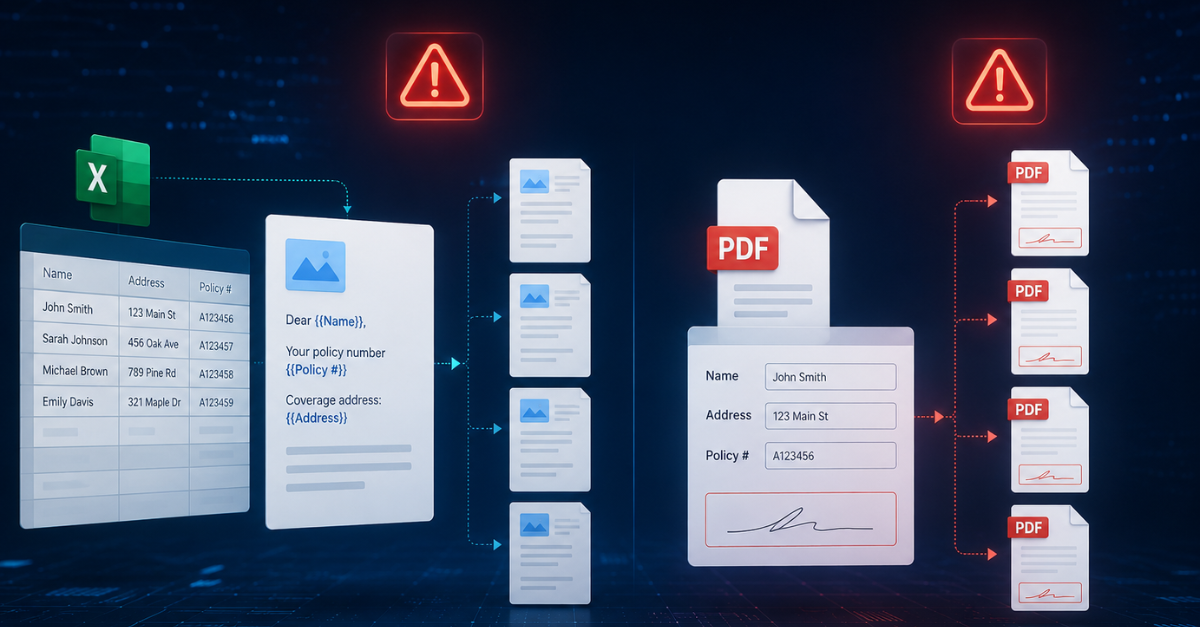
Then the enterprise requirements arrive. Conditional sections. Repeating data tables that grow dynamically. Multi-language output. PDF encryption. Watermarks. Month-end batch runs that need to generate tens of thousands of documents in a defined window. Your “simple template engine” becomes a product within a product, consuming more engineering hours than the features your customers actually pay for.
There’s a better approach: embed a purpose-built document generation engine and focus your team on what makes your platform unique.
The Deceptive Simplicity of Document Generation
Document generation looks like a solved problem. Merge some data into a template, render a PDF. Every platform team that builds it in-house starts with this assumption. For a simple invoice or a one-page letter, it holds.
The complexity hides in the enterprise requirements that follow:
- Conditional content. Sections that appear or disappear based on data: product variations, regulatory disclosures that differ by jurisdiction, optional clauses that depend on customer type.
- Repeating sections. Tables that grow dynamically: line items, beneficiary lists, cover schedules, transaction histories.
- Template governance. Version control, role-based access, approval workflows, and audit trails for template changes. When a regulator asks “who changed this template and when?”, you need an answer.
- Multi-format output. PDF, Word, and HTML from the same template, with consistent formatting across all of them.
- Enterprise scale. Batch runs generating tens of thousands of documents in minutes: renewals, statements, year-end correspondence.
Each of these is manageable in isolation. Together they create a system that rivals your core product in complexity. Unlike your core product, document generation isn’t what your customers are buying.
The Hidden Cost of Building It Yourself
The real cost isn’t the initial build. It’s the ongoing maintenance.
A custom-built document engine becomes a permanent line item on your engineering roadmap. Every new customer requirement (a different date format, a new regulatory disclosure, a template that needs to render correctly across English, French, German, and Spanish with the right character sets and accented characters) lands on your team’s backlog. Your developers spend time debugging PDF rendering edge cases instead of building the features that differentiate your platform.
The cost compounds in less obvious ways:
- Compliance gaps emerge when templates change without audit trails.
- Scaling bottlenecks appear when batch processing wasn’t designed into the original architecture.
- Security vulnerabilities surface in document handling code that doesn’t get the same review attention as your core platform.
- Talent drain as skilled developers maintain infrastructure they didn’t sign up to build.
For platform builders in insurance, financial services, and legal tech, document generation built in-house rarely stays small. It becomes a permanent line item on the engineering roadmap, consuming a material share of developer time that could have gone to the features your customers actually pay for.
What “Embedded” Actually Means
Embedding a document generation engine isn’t like bolting on a third-party widget with someone else’s branding. It’s closer to using a database engine: an infrastructure component that powers your product invisibly.
Here’s what embedded document generation looks like in practice:
API-first integration. Your platform calls a RESTful API with structured data and a template reference. The engine returns the generated document. Synchronous generation for real-time document delivery. Asynchronous queued generation for large batch runs, long-running jobs, and high-volume processing. Your users never see a different interface, a different login, or a different brand.
Template design in familiar tools. Templates are designed in Microsoft Word, not a proprietary editor that requires specialist training. Your implementation teams, or even your customers’ business users, can modify templates without developer involvement.
Multi-tenant architecture. Each of your customers gets isolated template sets, branding, and configuration. The engine tracks which tenant generated which document through traceability fields, giving you full audit visibility across your customer base.
Enterprise-grade from day one. Template versioning with role-based access control. Encryption, watermarks, and PDF security. Batch processing that handles hundreds of thousands of documents without infrastructure changes. These capabilities took years to build and harden. Your team gets them immediately.
Platform Builders Already Doing This
This isn’t theoretical. Platform builders across multiple verticals have embedded DocFusion as their document generation engine:
- Insurance platforms use DocFusion to generate policy documents, claims correspondence, and regulatory disclosures, handling conditional product variations, multi-jurisdiction requirements, and high-volume batch runs for renewals and annual statements.
- Conveyancing platforms generate the legal document packs that property transactions require, with template governance that satisfies compliance requirements.
- Financial services platforms produce client-facing reports, statements, and communications at scale, with the consistency and audit trail that regulated industries demand.
In each case, the platform’s end users never interact with DocFusion directly. They use the platform. The platform calls the engine. Documents appear. The platform gets the credit.
The pattern that makes this work is invisibility. The platform owns the workflow, the UX, and the brand. The engine handles generation, template governance, and batch scale. End users never see a different interface, a different login, or a different vendor.
The Build-vs-Embed Decision
If you’re building a platform that needs document generation, you have three options:
- Build it yourself. Full control, full maintenance burden. Works for simple use cases. Breaks at enterprise scale.
- Use a platform-locked vendor. Some document generation tools are tied to specific ecosystems — Salesforce-only, Microsoft 365-only. Fine if your platform lives entirely in that ecosystem. A constraint if it doesn’t.
- Embed a purpose-built engine. API-first, platform-agnostic, invisible to your users. Enterprise-grade from day one. Your team builds features; the engine handles documents.
The platform teams that choose option 3 share a common realisation: document generation is critical infrastructure, not a differentiating feature. It needs to work reliably at scale. It doesn’t need to be yours.
Key Takeaways
- Platform teams that build document generation in-house end up with a permanent line item on the engineering roadmap. Every new customer requirement (a date format, a regulatory disclosure, a multi-language rendering edge case) lands on the backlog, pulling developers off the features that differentiate the platform.
- Embedded document generation is infrastructure consumed via API. Not a white-label widget bolted onto the UI.
- Four things define genuine embeddability: API-first integration, Microsoft Word-based template design, multi-tenant architecture, and enterprise-grade features (RBAC, versioning, batch) from day one.
- Insurance, conveyancing, and financial services platforms run embedded engines in production. The pattern that makes it work is invisibility — the platform owns the UX and brand, the engine handles the document complexity.
- The build-vs-embed decision tips to “embed” when the document backlog starts competing with the product backlog for engineering attention.
Embed Enterprise-Grade Document Generation
DocFusion is an embedded document generation and template management engine used by platform builders to add enterprise-grade document output to their products. RESTful APIs, OAuth authentication, synchronous and asynchronous generation, multi-tenant architecture. Designed for integration, not as a standalone product.
If your platform generates documents and your team is spending engineering cycles maintaining that capability, book a technical discovery call. We’ll walk the architecture, the integration pattern, and the partnership model.