DocFusion

Why document generation is the very fabric of GDPR compliance
Document generation sits at the centre of modern enterprise operations, yet document generation is often underestimated as a compliance risk. In reality, document generation is where personal data is first assembled, transformed, and exposed, making document generation inseparable from GDPR compliance.
Every time document generation pulls data from source systems, applies business rules, and outputs customer-facing content, GDPR compliance is either enforced or weakened. Organisations may invest heavily in storage security and retention policies, but if document generation itself is not designed for GDPR compliance, risks are already embedded.
Put simply, document generation is not just an operational function; It is a frontline GDPR compliance surface that determines whether personal data is handled lawfully, consistently, and defensibly.
Document generation as the first GDPR compliance checkpoint
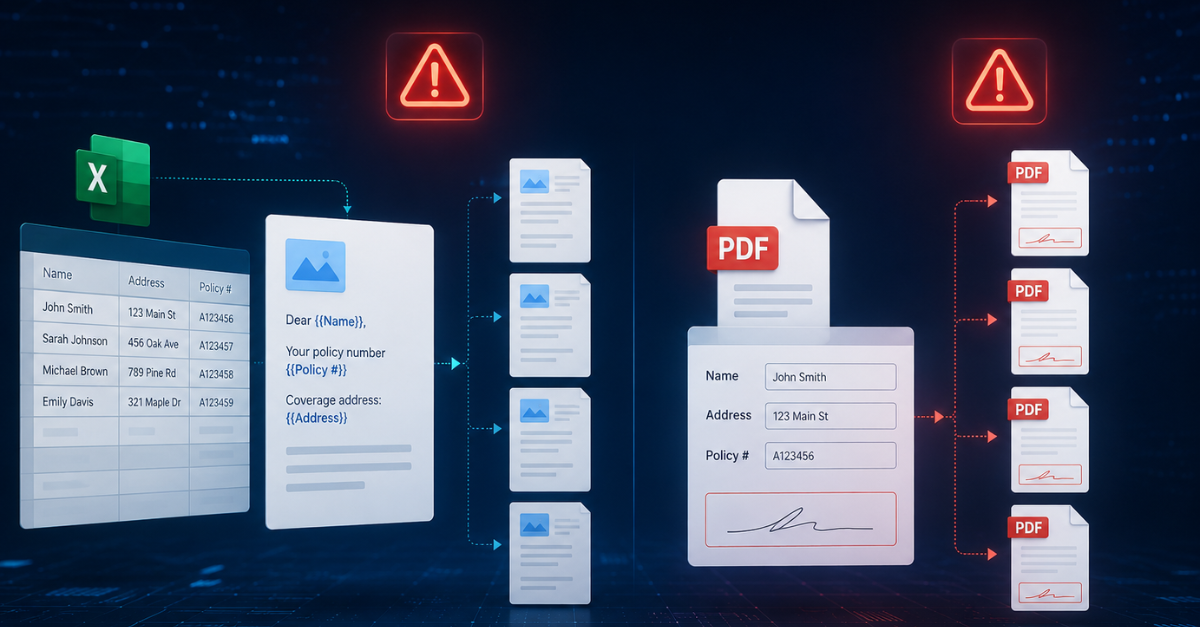
Document generation is often the first moment personal data is actively processed into a usable form, which is why document generation must be treated as a primary GDPR compliance checkpoint. At this stage, names, addresses, policy details, financial information, and special category data are combined into structured outputs. If GDPR compliance controls are absent during document generation, errors such as over-disclosure, outdated data, or incorrect recipients become systemic rather than exceptional.
Unlike downstream systems, document generation touches multiple data sources at once, amplifying the impact of any GDPR compliance failure. A single template change or logic error in document generation can affect thousands of documents, creating immediate exposure. Treating document generation as a governed compliance surface allows organisations to enforce data minimisation, purpose limitation, and accuracy before documents ever leave the system.
Why document generation magnifies GDPR compliance risk at scale
As volumes increase, document generation magnifies GDPR compliance risk exponentially. High-volume batch runs, automated correspondence, and on-demand communications all rely on document generation engines operating at speed. Without embedded GDPR compliance controls, scale turns small issues into regulatory incidents.
Document generation frequently operates with conditional logic and dynamic data mapping, which makes GDPR compliance harder to manage manually. Each rule, data connection, and output variation represents a potential point of failure. When document generation is decentralised across teams or tools, maintaining consistent GDPR compliance becomes almost impossible. Centralising and orchestrating document generation enables organisations to apply uniform compliance logic, audit trails, and approvals across all outputs.


Document generation exposes governance gaps in GDPR compliance
Many organisations believe they are compliant because data storage and access controls are strong, yet document generation often reveals hidden governance gaps in GDPR compliance. Templates may be copied, modified, or deployed without oversight, leading to version drift and inconsistent data usage.
In these environments, document generation becomes a blind spot where GDPR compliance policies exist on paper but not in execution. Missing approvals, lack of traceability, and unclear ownership all surface during audits. By elevating document generation to a governed compliance surface, organisations can enforce template lifecycle management, role-based access, and documented approvals that directly support GDPR compliance obligations.
The role of orchestration in document generation and GDPR compliance
Orchestration changes how document generation supports GDPR compliance by coordinating people, systems, and rules in a controlled flow. Instead of treating document generation as a standalone task, orchestration embeds compliance checks, validations, and decision points throughout the process.
With orchestrated document generation, GDPR compliance requirements such as lawful basis validation, consent flags, and data accuracy checks can be enforced automatically. This reduces reliance on manual reviews and tribal knowledge.
Orchestration also ensures that document generation actions are logged, traceable, and auditable, which is critical when demonstrating GDPR compliance to regulators.
Making document generation defensible under GDPR compliance scrutiny
Regulators increasingly expect organisations to prove not just intent, but execution of GDPR compliance. Document generation is often the evidence trail regulators examine, because documents show how data is actually communicated to individuals.
To make document generation defensible, organisations must design GDPR compliance into templates, workflows, and data integrations. This includes limiting data exposure by design, validating outputs before release, and maintaining clear audit histories. When document generation is treated as a critical GDPR compliance surface, organisations move from reactive remediation to proactive risk control.
Ultimately, document generation is where GDPR compliance becomes real. By recognising document generation as a critical compliance surface and governing it accordingly, organisations can reduce risk, improve consistency, and build trust at scale.
Start your document generation journey today.
Looking for more information on GDPR? Read our blog: From compliance to confidence: How DocFusion enables GDPR-ready document generation here.