DocFusion
What is document generation?
Document generation is the process of automatically creating business documents using structured data, predefined templates, business rules, and dynamic content. Document generation allows organisations to produce documents such as invoices, contracts, policy schedules, onboarding packs, statements, certificates, and customer communications without manually formatting or editing every file.
In modern enterprises, document generation is no longer viewed as a back-office utility. Instead, document generation has become a core operational capability that directly impacts customer experience, compliance, scalability, and operational efficiency. Businesses that rely on document generation are able to reduce manual work, eliminate repetitive tasks, and ensure that every document produced follows consistent branding, formatting, and regulatory standards.
How does document generation work?
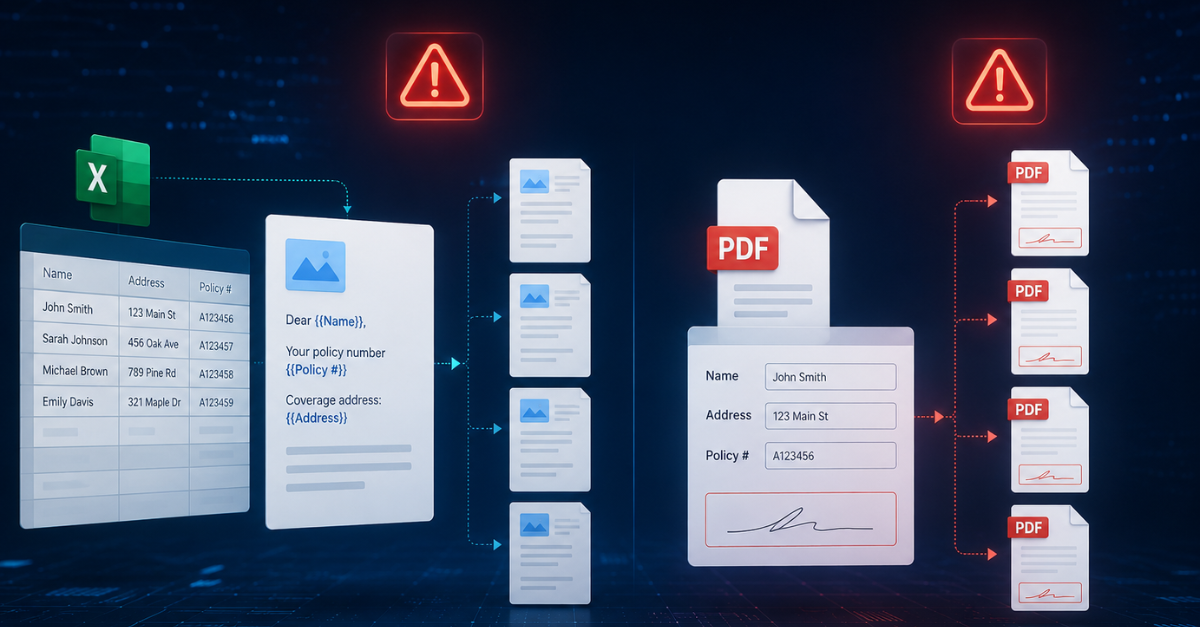
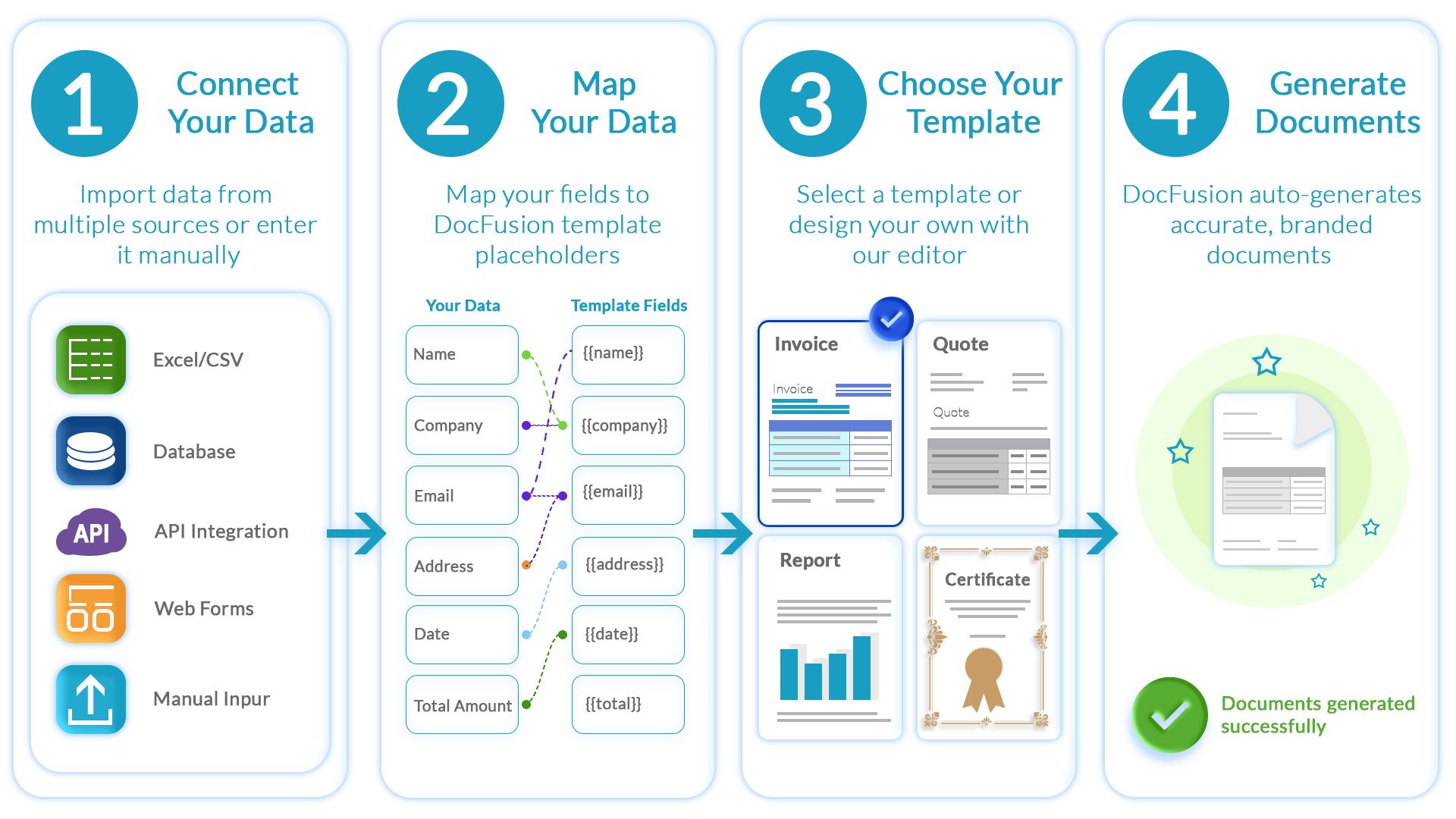
At its core, document generation connects data sources to templates. A system pulls information from CRMs, ERPs, banking systems, insurance platforms, databases, APIs, or business applications and merges that information into dynamic templates. The document generation engine then applies logic, formatting rules, conditional content, calculations, and approvals before producing a final document in formats such as PDF, Word, HTML, or email-ready output.
A modern document generation platform can handle far more than simple mail merge functionality. Today’s organisations require sophisticated workflows that support multilingual content, digital signatures, customer-specific clauses, complex calculations, version control, audit tracking, and omnichannel delivery. This is why document generation has become critical infrastructure for industries that process large volumes of customer communications and regulated documentation.
Why businesses need document generation
Every growing business eventually encounters the same challenge. Manual document processes do not scale. Teams spend hours copying and pasting information into templates, correcting formatting issues, reviewing versions, and managing approval chains. As document volumes increase, the risk of human error also increases.
Document generation solves these problems by automating the creation process from start to finish. Instead of manually building documents one at a time, businesses can generate thousands of accurate documents instantly using live business data. This reduces operational costs, improves turnaround times, and creates a far more reliable customer experience.
For customer-facing industries such as insurance, banking, healthcare, telecommunications, and legal services, document generation also improves compliance. Automated workflows ensure that the correct disclosures, terms, conditions, and regulatory language always appear in the right documents. This consistency is essential in highly regulated environments where documentation errors can create financial and legal risk.
Common types of documents generated automatically
Modern businesses use document generation across nearly every department and workflow. Common examples include:
- Contracts and agreements
- Insurance policy documents
- Bank statements and loan agreements
- Customer onboarding packs
- Quotes and proposals
- Regulatory disclosures
- Financial statements
- Claims documentation
- Employment contracts
- Tax certificates
- Invoices and purchase orders
- Healthcare records and forms
The ability to generate these documents automatically helps businesses operate faster while maintaining consistency across every customer interaction.
The difference between basic templates and enterprise document generation
Many organisations initially start with simple template tools or basic PDF form fillers. While these tools may work for small teams or low document volumes, they often fail as operational complexity increases.
Enterprise document generation platforms are designed to manage far more advanced requirements. These systems support API integrations, workflow automation, conditional business logic, reusable content blocks, approval management, audit trails, security controls, and cloud scalability.
For example, a single insurance policy document may require hundreds of conditional rules depending on customer risk profile, product type, regulatory jurisdiction, language preference, and payment structure. A true document generation platform can handle this complexity dynamically without requiring manual intervention.
This distinction is important because document generation at enterprise scale is not simply about producing files. It is about building reliable, automated communication infrastructure that integrates directly into business operations.
Benefits of document generation
The benefits of document generation extend beyond saving time. Businesses that modernise their document processes typically experience improvements across multiple operational areas.
Faster operations
Automated workflows drastically reduce the time required to create and distribute documents. What previously took hours can often be completed in seconds.
Improved accuracy
Because document generation uses structured data directly from source systems, the risk of manual data entry errors is significantly reduced.
Better customer experience
Customers receive faster, more consistent, and professionally branded communications. This improves trust and strengthens brand perception.
Stronger compliance
Automated templates ensure regulatory wording, disclosures, and approval processes remain consistent across all generated documents.
Reduced costs
Businesses reduce operational overhead by eliminating repetitive manual document preparation tasks.
Scalability
As organisations grow, document generation systems can support significantly higher document volumes without requiring proportional increases in staff.
Industries that depend on document generation
Many industries now rely heavily on document generation to support daily operations.
Financial services
Banks and lenders use document generation for loan agreements, account statements, onboarding packs, compliance documentation, and customer communications.
Insurance
Insurance providers generate policy schedules, claims correspondence, renewal notices, and regulatory disclosures using automated workflows.
Healthcare
Healthcare organisations use document generation for patient records, medical forms, treatment plans, billing documents, and compliance reporting.
Legal services
Law firms automate the creation of contracts, case files, agreements, and legal correspondence.
Telecommunications
Telecom providers generate customer contracts, invoices, service agreements, and onboarding documentation at scale.
What to look for in a document generation platform
Not all platforms are built for modern enterprise requirements. Businesses evaluating document generation solutions should look for several key capabilities:
- API-first architecture
- Cloud and hybrid deployment options
- Microsoft Word-based template design
- Workflow automation
- Security and access controls
- Version management
- Audit tracking
- Omnichannel delivery support
- Integration flexibility
- Scalability for high-volume processing
The right document generation platform should integrate into existing business systems rather than forcing organisations to redesign their operations around proprietary tooling.
Why DocFusion stands out
As document requirements become more complex, organisations need a document generation platform that combines enterprise scalability with business-user simplicity. This is where DocFusion stands out.
DocFusion provides enterprise-grade document generation through a modern API-first architecture that integrates seamlessly with existing systems. Business users can design and maintain templates directly within Microsoft Word, reducing reliance on developers and accelerating document change cycles.
Unlike many legacy platforms, DocFusion supports cloud, on-premises, and hybrid deployments while maintaining the same document generation capabilities across environments. Its workflow automation, version control, audit tracking, and omnichannel delivery functionality make it suitable for highly regulated industries that require both operational efficiency and governance.
For organisations looking to modernise customer communications, streamline operations, and scale document automation across the enterprise, DocFusion delivers a flexible and future-ready document generation platform built for modern business needs.
Final thoughts
Document generation has evolved from a simple templating function into a critical business capability that supports automation, compliance, customer experience, and operational scalability. As businesses continue to digitise operations and increase customer expectations, the ability to generate accurate, personalised documents at scale becomes increasingly important.
Organisations that invest in modern document generation infrastructure are better positioned to reduce operational friction, improve compliance, and deliver faster, more consistent customer communications across every channel.